

Anjou, Saumur's Grapes: Cabernet Franc, Chenin Blanc
Cabernet Franc
It would hard to talk about the French black grape variety Cabernet Franc without mentioning Cabernet Sauvignon, the variety with which it is frequently blended and to which it quite regularly plays second fiddle. But then they are related � Cabernet Franc is a parent of the more widely planted Cabernet Sauvignon, along with Sauvignon Blanc. Not surprisingly, then, does Cabernet Franc share many characteristics with its offspring, though the resulting wine is lighter and less tannic. Expect something light to medium bodied, with good aromas, including some herbaceousness reminiscent of unripe Cabernet Sauvignon but with more immediate fruit. Cabernet Franc is happy in cool, inland climates, such as the middle Loire (Anjou-Saumur and Touraine) and the Libournais in Bordeaux. It buds and matures over a week earlier than Cabernet Sauvignon, is easier to ripen fully and less troubled by poor weather during harvest. In Bordeaux�s Medoc and Graves, where it is always blended with other grapes, it is planted as insurance in case the Cabernet Sauvignon or Merlot harvests fall foul of the weather. As well as being found all over southwest France, it�s also prevalent in northwest Italy (though some of what was thought to be Cabernet Franc has turned out to be Carmenere), is gaining popularity in Tuscany and central Italy as a supplement to their Cabernet Sauvignon, and appears in Slovenia and further east. In most other countries where there are Cabernet Franc vineyards (the New World, for instance), it is there for one reason: to blend with Cabernet Sauvignon for a Bordeaux mix. Occasionally, it brings something surprising too � Canada, for example, has made ice wine from it and, of course, it would be remiss not to mention Bordeaux beauty Cheval Blanc � the most exalted Cabernet Franc-dominated wine in the world.
Chenin Blanc
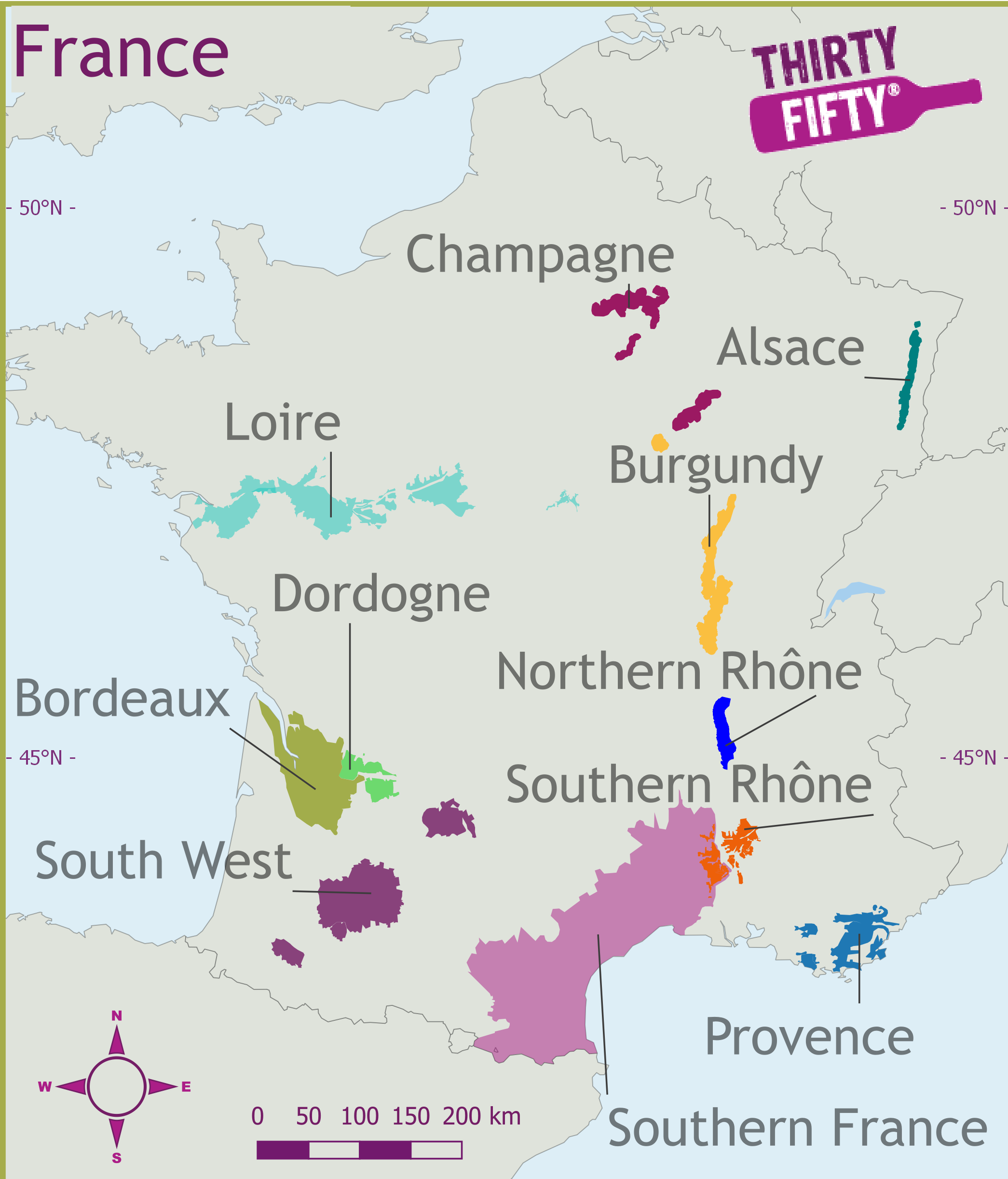
Chenin Blanc is a native of France, or more specifically the Loire, yet it's now more prevalent in South Africa, where it is the most planted grape. This white grape is certainly versatile: it goes from producing some of the finest, most age worthy sweet wines to being responsible for a vast amount of sparkling wine, basic New World gluggers and high-quality examples. In South Africa, it is also used as a base for fortified wines and spirits. The variety is marked by the flavours of honey, flowers and damp straw as well as high acidity, which can be a problem in the Loire's less-ripe vintages but is a bonus in hotter climates. It's a vigorous grower with good resistance to disease and wind, but it buds early, which exposes it to spring frosts, and ripens late. In newer wine regions, it's grown on a wide variety of soils but French growers prize the calcareous soils, particularly the tuffeau of Touraine. In fact, it's Touraine as well as Anjou-Saumur that are Chenin's bases today in the Loire. Here, wines range from basic and vaguely floral to intense honeyed wines made either sweet (moelleux), dry or demi-sec, but all with vibrant acidity. The region's Chenin sparklers include Saumur Mousseux, Cremant de Loire and Vouvray, while, in the south, the grape is also an ingredient with Mauzac and Chardonnay in the sparkling wines of Limoux. Chenin Blanc is also grown in other New World countries, including Australia and America (mostly California), where it's often blended. In France, it is sometimes called Pineau or Pineau de la Loire and in South Africa it also goes by the name Steen.
PDO's & PGI's
- AC Anjou
- AOC Coteaux du Layon
- AOC Saumur
- AOC Saumur-Champigny
- AOC Savennières
Anjou, Saumur
Key Grape Varieties: Cabernet Franc, Chenin Blanc